August 18, 2026

4
min read
Embracing Security with Data Masking
Learn how data masking protects sensitive data across SaaS, cloud, GenAI, MCP, and endpoints with Strac’s DSPM and DLP platform.
· Data masking protects sensitive information byreplacing or obscuring the original value while preserving enough structure forlegitimate workflows.
· Modern masking needs to extend beyond databasesinto SaaS, cloud storage, GenAI, browsers, endpoints, APIs, and MCP workflows.
· Masking is only one remediation option;organizations may also need redaction, blocking, deletion, encryption,quarantine, or user coaching depending on context.
· DSPM helps organizations discover wheresensitive data exists, while DLP controls what happens when that data isaccessed, shared, uploaded, or sent somewhere risky.
· Straccombines DSPM and DLP to discover sensitive data and enforce remediation acrossmodern data environments, including emerging AI and MCP data flows.
Data masking used to be primarily about hiding sensitive fields in databases before production data reached developers or test environments. In 2026, that definition is too narrow.
Sensitive data now moves through SaaS applications, support tickets, cloud storage, employee devices, AI prompts, browser sessions, APIs, and MCP-connected tools. Effective masking therefore needs to happen wherever sensitive data is discovered or exchanged, and in many cases it needs to happen in real time.
This is where modern Data Loss Prevention (DLP) and Data Security Posture Management (DSPM) extend traditional masking. Platforms such as Strac combine discovery, classification, masking, redaction, blocking, and other remediation controls across the modern data environment.
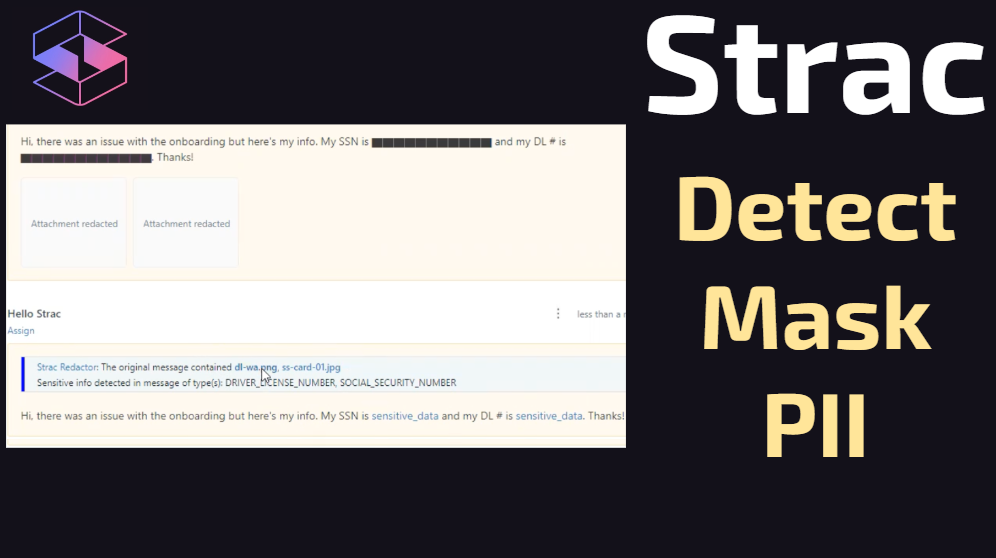
Data masking is the process of obscuring sensitive information so unauthorized users, applications, or systems cannot access the original value.
For example, instead of displaying:
Credit card: 4532 1234 5678 9012
a masked application might display:
Credit card: XXXX XXXX XXXX 9012
The important idea is that the original sensitive information is protected while the resulting data can still support an authorized business process.
Masking can be applied to PII, PHI, PCI data, credentials, financial information, customer records, employee information, and other sensitive data.
Depending on the use case, organizations may use static masking, dynamic masking, pseudonymization, tokenization, or complete redaction.
The challenge is no longer simply protecting a production database.
Sensitive data constantly moves between employees, SaaS applications, AI systems, cloud infrastructure, endpoints, and third-party services.
An employee might paste customer information into ChatGPT. A support agent might receive a Social Security number through Zendesk. A developer might upload a production file containing customer records to an AI coding assistant. An MCP-connected AI agent might retrieve sensitive information from an internal system and send it to another tool.
The security question therefore becomes:
Can you detect sensitive data wherever it appears and enforce the appropriate protection before it reaches the wrong person, application, AI model, or destination?
That is the role masking increasingly plays within a broader DLP and DSPM architecture.
These controls are related, but they solve different problems.
Masking obscures some or all of a sensitive value.
For example:
john.smith@example.com → j***@example.com
It is useful when someone still needs limited visibility into the underlying information.
Redaction removes the sensitive information from view or from the data being transmitted.
For example:
SSN: 123-45-6789 → SSN: [REDACTED]
This is especially useful in customer support, collaboration, and AI workflows where the sensitive value is unnecessary.
Pseudonymization replaces identifying information with an alternative value while allowing authorized systems to maintain useful relationships between records.
This becomes particularly important when teams need realistic datasets for analytics, development, AI, or testing without exposing production identities.
For organizations that need structurally realistic copies of production data, Strac's data pseudonymization capabilities can help preserve referential integrity while removing direct exposure to the original sensitive values.
A large amount of sensitive data leakage is not malicious. Employees copy information into tickets, messages, documents, AI prompts, spreadsheets, and SaaS applications while doing normal work.
Real-time detection and masking can prevent these routine actions from becoming security incidents.
Developers, analysts, contractors, customer support teams, and operations personnel frequently need access to systems containing sensitive information.
They often do not need the sensitive values themselves.
Masking reduces unnecessary exposure while allowing legitimate workflows to continue.
Employees increasingly send corporate information to ChatGPT, Claude, Gemini, Copilot, AI coding assistants, and other GenAI services.
Traditional database masking does little to protect these interactions.
Modern AI DLP can inspect prompts, uploads, and other AI interactions for sensitive information and apply policies such as redaction or blocking before data reaches an unauthorized AI destination.
Model Context Protocol (MCP) introduces another important data path.
AI agents can use MCP servers and connectors to interact with databases, SaaS platforms, developer tools, internal services, and other enterprise resources. Sensitive data can therefore move automatically between an AI model and connected tools without an employee manually copying anything.
An MCP-aware DLP layer can inspect these exchanges and enforce policies before sensitive data crosses an inappropriate trust boundary.
This is increasingly important as organizations move from employees simply chatting with AI toward AI agents actually taking actions inside enterprise systems.
Frameworks and regulations such as PCI DSS, HIPAA, GDPR, CCPA, and SOC 2 create requirements around protecting sensitive information and controlling access.
Masking and redaction can reduce unnecessary exposure and help organizations demonstrate that sensitive information is protected across business workflows.
Traditional masking capabilities are no longer enough for organizations operating across SaaS, cloud, endpoints, and AI.

You cannot mask data you cannot find.
Modern platforms should continuously discover and classify sensitive information across structured and unstructured environments.
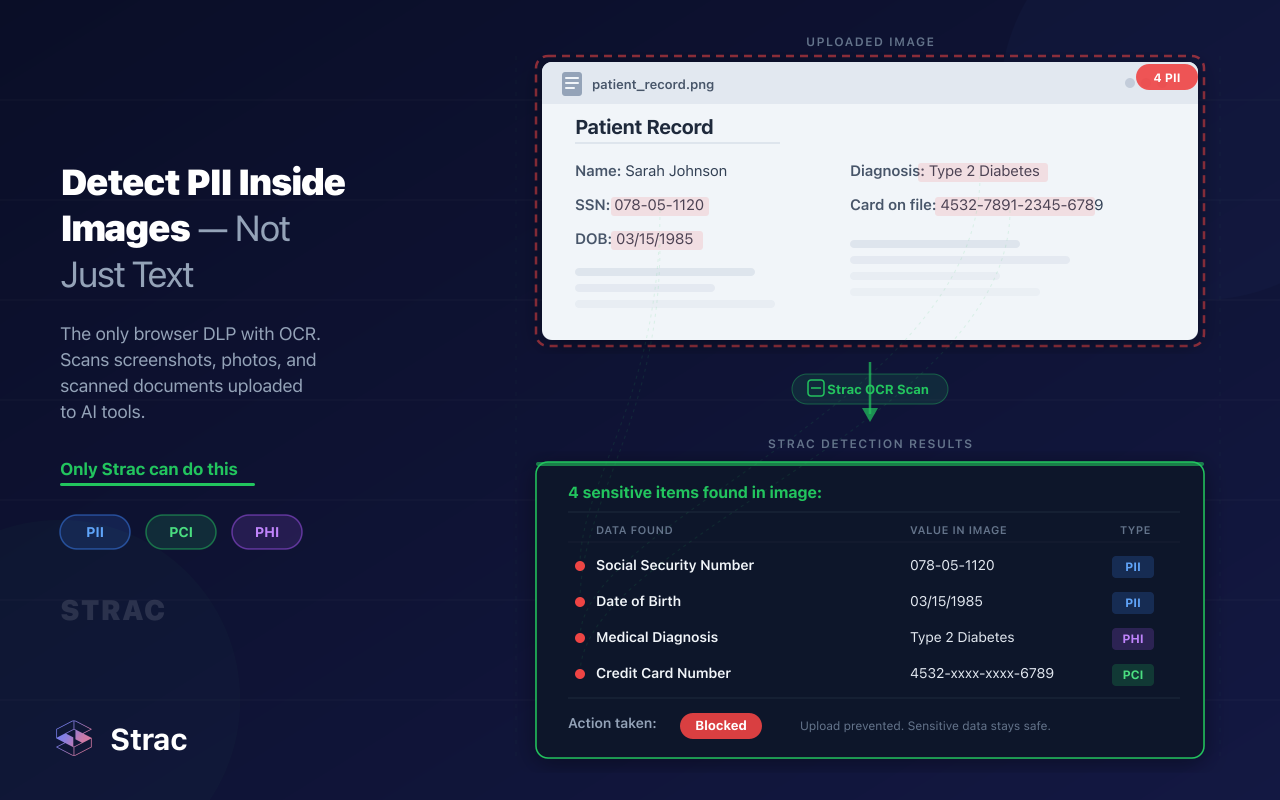
Simple pattern matching can produce large numbers of false positives.
Modern detection can combine ML, OCR, contextual analysis, predefined sensitive data elements, and custom detectors to identify sensitive information inside text, files, images, documents, attachments, and application workflows.
Strac specifically positions its detection around ML and OCR rather than relying solely on regex-based rules.
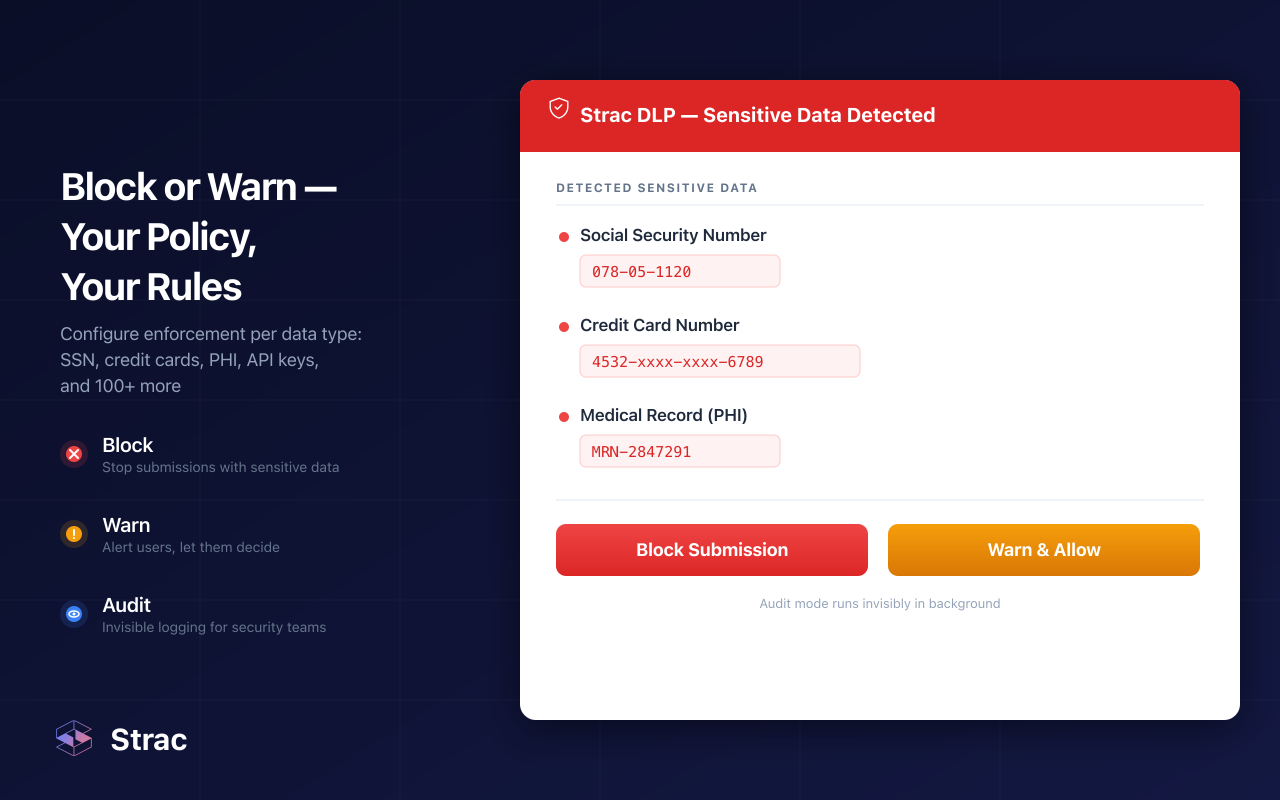
Detection alone creates another alert for security teams.
Organizations increasingly need automated actions such as:
The appropriate response depends on the data, user, application, destination, and business context.
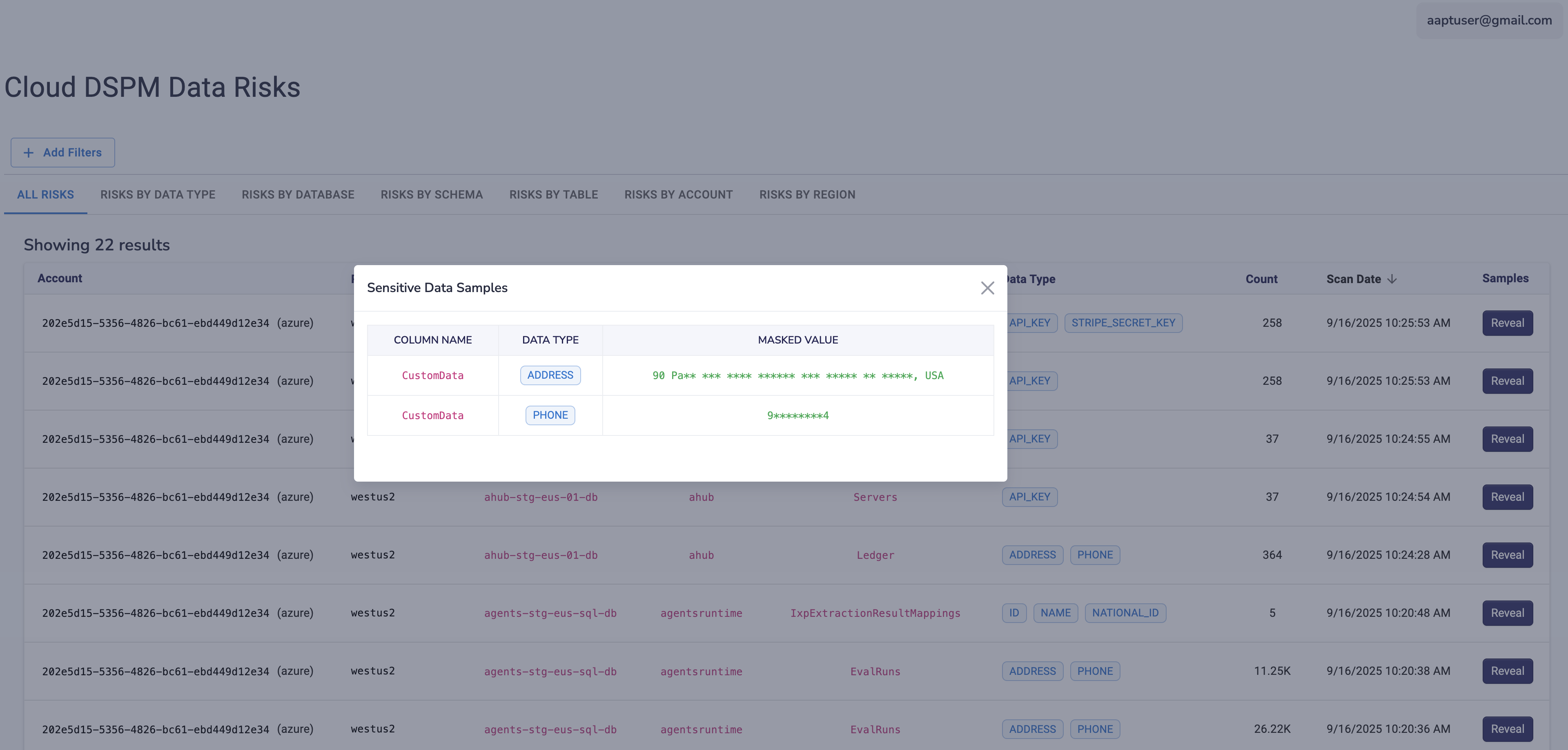
Sensitive information can appear inside Slack conversations, Salesforce records, Zendesk tickets, Google Workspace files, cloud storage, email, and dozens of other applications.
A modern masking strategy needs visibility and enforcement across those environments rather than protecting one database or communication channel.
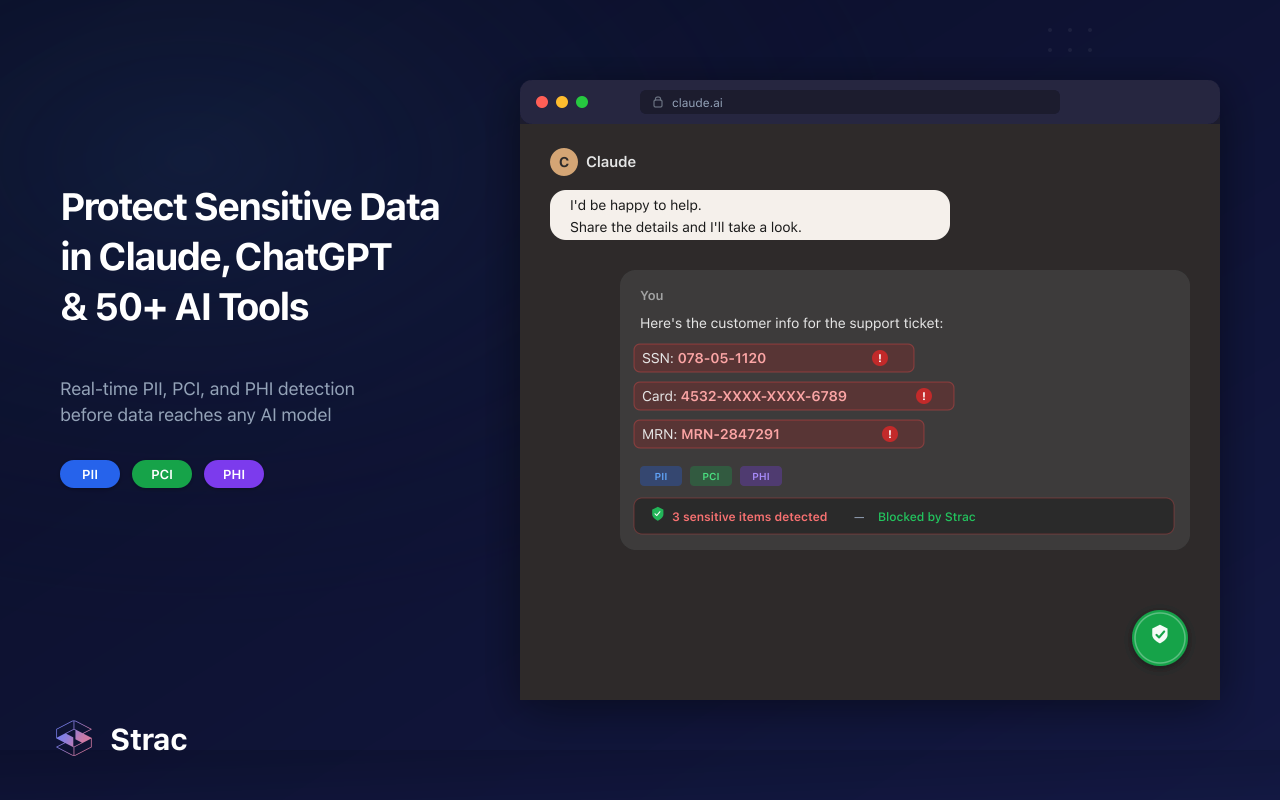
Organizations need policies governing sensitive information entering and leaving AI applications.
AI DLP can detect sensitive information in prompts and uploads and apply remediation before exposure occurs.
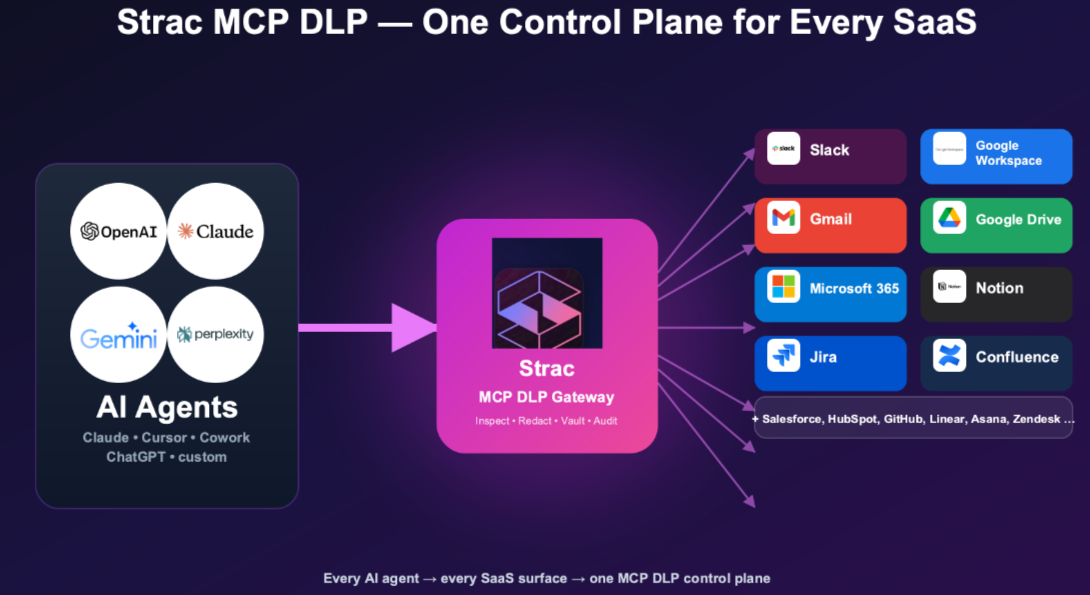
As agentic AI adoption grows, security controls also need visibility into AI-to-tool communication.
MCP DLP can act as an enforcement layer between models, MCP clients, servers, connectors, and enterprise resources so sensitive data policies continue to apply when AI agents retrieve or transmit information.
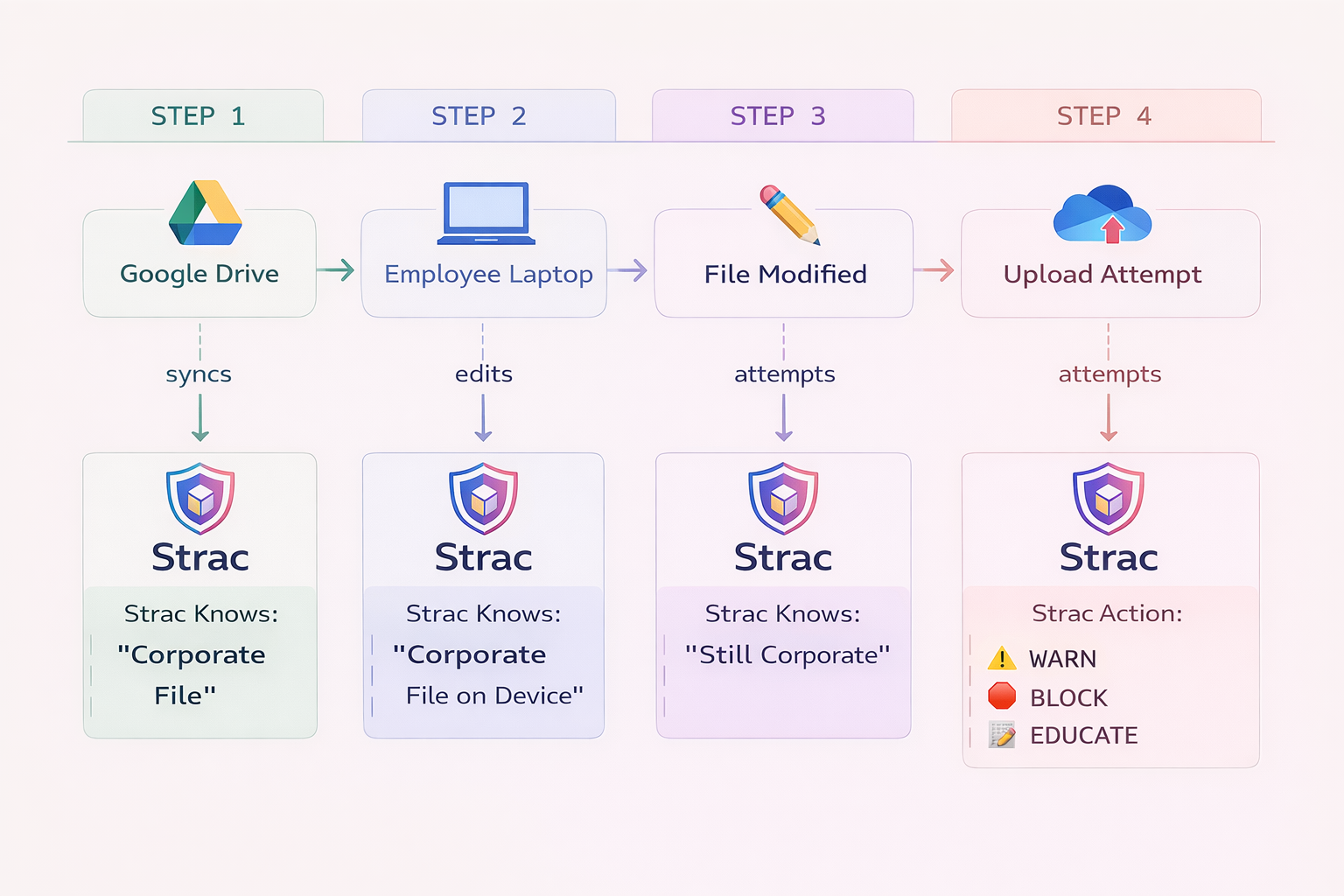
Not every sensitive-data movement happens through an API-connected SaaS application.
Employees can copy, paste, upload, download, print, or transfer information from endpoints and browsers. Endpoint and browser DLP help extend masking and other policies to these user-driven data movements.
Strac approaches masking as part of a broader sensitive-data protection platform rather than as an isolated database feature.
The platform combines DSPM and DLP so organizations can discover sensitive information, understand where it exists, and then enforce policies when that information moves.
Its coverage spans SaaS, cloud, GenAI, and endpoint environments, with integrations designed to protect data inside real business workflows.
DSPM answers questions such as:
Where is our sensitive data? Who has access to it? Where are our risky exposures?
DLP addresses the next question:
What should happen when someone tries to use or move that data?
Strac combines these capabilities so discovery can lead directly to remediation rather than stopping at another security dashboard.
Strac can apply inline remediation to sensitive information instead of simply generating an alert.
For example, sensitive information appearing in a customer support interaction can be identified and redacted so employees can continue working without unnecessarily retaining or viewing the original data.
This capability is particularly valuable in fast-moving environments such as Slack, Zendesk, Salesforce, and other SaaS workflows.
Strac extends sensitive-data discovery and enforcement across SaaS applications and cloud data stores.
This gives organizations a way to protect sensitive information across collaboration, customer support, CRM, storage, and backend environments instead of managing disconnected masking solutions for each system.
Strac extends DLP controls into GenAI workflows so organizations can identify sensitive information being sent to AI applications.
Policies can then determine whether that information should be allowed, redacted, or blocked based on organizational requirements.
This helps organizations adopt AI without treating every prompt, file upload, and AI interaction as an uncontrolled data channel.
Strac's MCP security capabilities extend DLP into agentic AI workflows.
As AI agents gain access to enterprise tools through MCP, organizations need control over what information models can retrieve and what information can move between connected systems.
An MCP DLP gateway provides a policy enforcement point for those exchanges, helping prevent PII, PHI, PCI data, credentials, secrets, and other sensitive information from flowing into unauthorized models, tools, or destinations.
Strac also extends protection to endpoints, helping organizations understand and control sensitive-data movement at the device level.
This becomes especially important when data moves outside sanctioned SaaS integrations through browser uploads, local applications, file transfers, copy/paste actions, or other endpoint activity.
Sensitive information does not always arrive as searchable text.
Strac uses OCR and content-aware detection to identify sensitive information inside images and complex document formats, allowing masking and remediation policies to extend beyond simple text fields.
Organizations can detect common sensitive-data categories such as PII, PHI, PCI information, financial data, credentials, and secrets while creating custom data elements for business-specific information.
This allows masking policies to reflect the organization's actual data rather than relying entirely on generic rules.
Strac's sensitive-data detection and remediation capabilities can support organizations working toward requirements associated with PCI DSS, HIPAA, GDPR, SOC 2, and other compliance frameworks.
Instead of treating compliance as a reporting exercise, policies can be enforced directly where sensitive information is discovered or exchanged.
Imagine a customer sends the following message to a support agent:
"My SSN is 123-45-6789 and my card is 4532 1234 5678 9012."
Without DLP, those values could remain inside the support ticket indefinitely and become visible to employees, contractors, integrations, AI assistants, or downstream systems.
With real-time detection and remediation, the ticket could instead display:
"My SSN is [REDACTED] and my card is XXXX XXXX XXXX 9012."
The support team can still resolve the issue without unnecessarily exposing the customer's most sensitive information.
Strac's messaging specifically emphasizes this ability to redact PII, PCI, PHI, secrets, and other sensitive information in SaaS and support workflows rather than simply generating alerts after exposure has already happened.
Consider an employee asking an AI assistant:
"Summarize this customer account. Their SSN is 123-45-6789 and account number is 84930211."
A traditional masking solution sitting inside a database may never see this interaction.
AI DLP can inspect the prompt before it reaches the AI application and transform it into something like:
"Summarize this customer account. Their SSN is [REDACTED] and account number is [REDACTED]."
The employee can continue using AI while the organization reduces unnecessary disclosure of customer information.
Now consider an AI agent connected through MCP to CRM and support systems.
The agent retrieves a customer record containing PII and attempts to send the information to another AI-connected tool.
The employee may never manually handle the data.
This is why MCP changes the data masking conversation. Protection needs to operate not only between humans and applications, but also between AI models, agents, connectors, tools, and enterprise data.
MCP DLP gives organizations a control point where sensitive information can be detected and remediated before the agent completes the action.
Data masking is no longer just a technique for creating safe copies of production databases.
It is becoming one possible enforcement action inside a much broader data security architecture.
Organizations first need to discover and classify sensitive information. They then need enough context to understand how that information is being used. Finally, they need the ability to automatically mask, redact, block, delete, encrypt, quarantine, or otherwise remediate the data when risk appears.
That is why DSPM, DLP, AI security, endpoint protection, and MCP security are increasingly converging.
Data masking remains an important security control, but the places where organizations need it have fundamentally changed.
Sensitive data now moves continuously across SaaS applications, cloud environments, employee endpoints, browsers, GenAI prompts, APIs, and increasingly MCP-connected AI agents. Protecting it requires more than masking a database before handing it to developers.
Strac brings masking and redaction into a unified DSPM + DLP approach that discovers sensitive information and enforces protection across the environments where modern businesses actually use their data.
The goal is simple: allow employees, applications, and AI systems to use the data they need without unnecessarily exposing the sensitive information they don't.
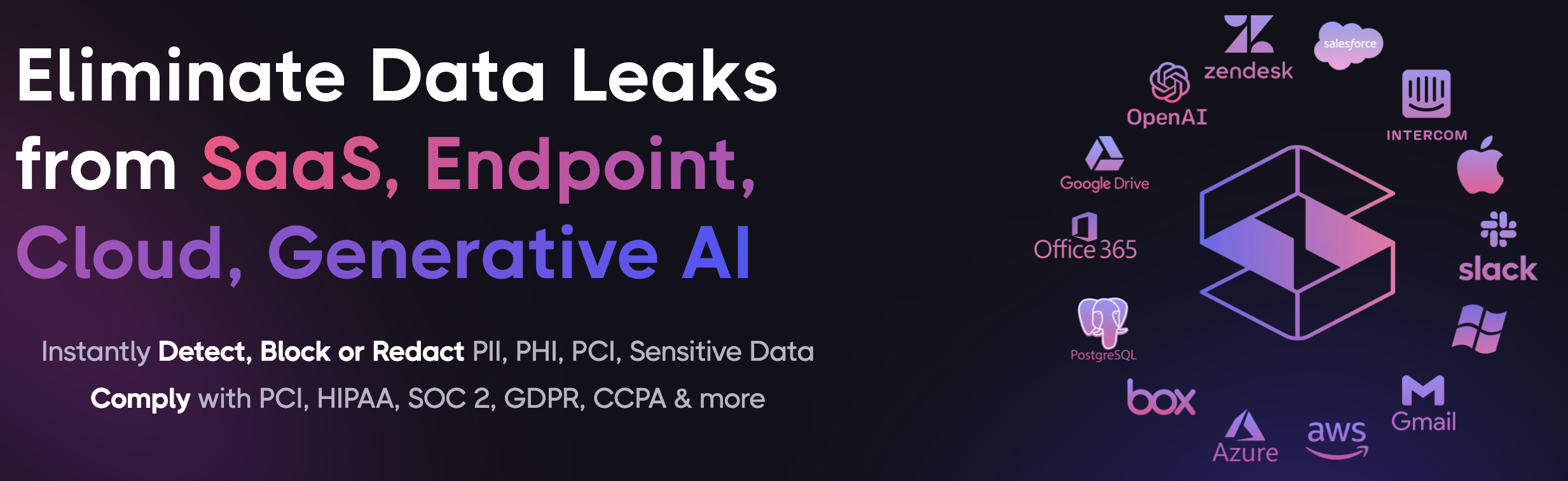
No. Traditional data masking was designed mainly for databases, testing, and analytics environments. In 2026, sensitive data can leave the organization through ChatGPT prompts, AI uploads, SaaS apps, browsers, endpoints, APIs, and MCP-connected agents. Organizations need masking as part of broader DLP controls that can detect and remediate sensitive data while it is actually moving.
Data masking is a remediation technique; DLP is the broader security control that determines when and where that remediation should happen. Modern DLP can detect sensitive data and then mask, redact, block, delete, quarantine, encrypt, or otherwise remediate it depending on the context. Strac combines these enforcement capabilities with DSPM-based discovery and classification.
Yes. AI DLP can inspect prompts and uploads for PII, PHI, PCI data, credentials, secrets, and other sensitive information before it reaches an AI application. Depending on policy, the sensitive portion can be redacted or the interaction can be blocked while allowing employees to continue using approved AI workflows.
Because humans are no longer the only ones moving sensitive data. MCP allows AI agents to retrieve information from enterprise tools and pass information between connected systems. An MCP DLP gateway can provide an enforcement point where sensitive data is detected and remediated before an AI agent sends it somewhere it should not go.
Because redaction is not always the right response. Sometimes an employee needs the workflow but not the sensitive value, making redaction ideal. In higher-risk situations, the entire action may need to be blocked. Strac's broader approach is to apply the appropriate remediation based on the sensitive data and workflow rather than treating every violation as another security alert.
.avif)


.gif)


.webp)